
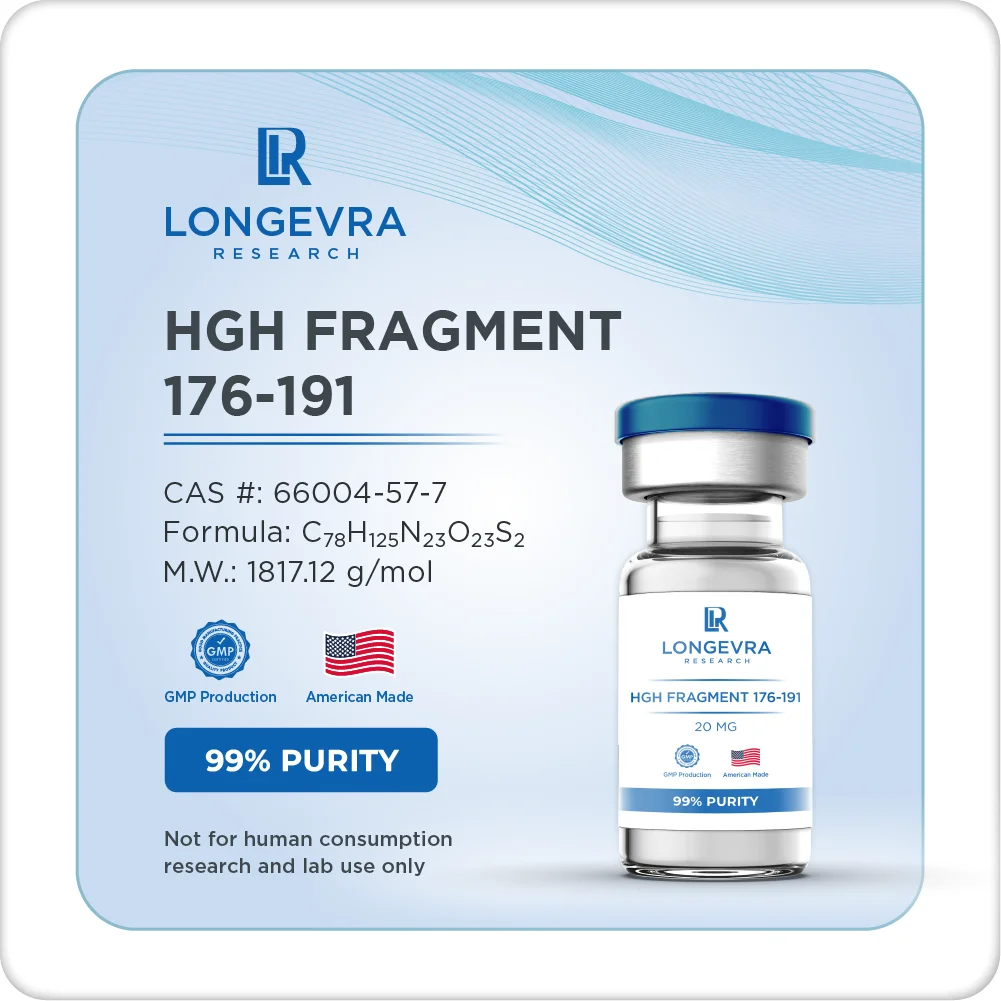
High-Fragment 176-191
$ 110
TB-500 Fragment (17-23), also called fequesetide or (17) (LKKTETQ) (23), represents the smallest portion of the thymosin beta-4 molecule that retains the larger protein’s active binding domain. Research indicates that this synthetic derivative of thymosin beta-4 is capable of binding to actin, the molecule inside of cells that is responsible for cell structure, movement (a.k.a. migration), and replication. By altering the function of actin in cells, TB-500 Fragment (17-23) has been shown to modulate the immune response and alter cell migration patterns. This, in turn, can lead to large-scale changes in tissue/organ structure and function. In animal models, these changes have been shown to accelerate wound healing, decrease inflammation, promote blood vessel growth, reduce scar formation, improve musculoskeletal function, and even help to slow or reverse the course of certain disease conditions.
Description
TB-500 Fragment (17-23), also called fequesetide or (17) (LKKTETQ) (23), represents the smallest portion of the thymosin beta-4 molecule that retains the larger protein’s active binding domain. Research indicates that this synthetic derivative of thymosin beta-4 is capable of binding to actin, the molecule inside of cells that is responsible for cell structure, movement (a.k.a. migration), and replication. By altering the function of actin in cells, TB-500 Fragment (17-23) has been shown to modulate the immune response and alter cell migration patterns. This, in turn, can lead to large-scale changes in tissue/organ structure and function. In animal models, these changes have been shown to accelerate wound healing, decrease inflammation, promote blood vessel growth, reduce scar formation, improve musculoskeletal function, and even help to slow or reverse the course of certain disease conditions.

Reviews
There are no reviews yet.